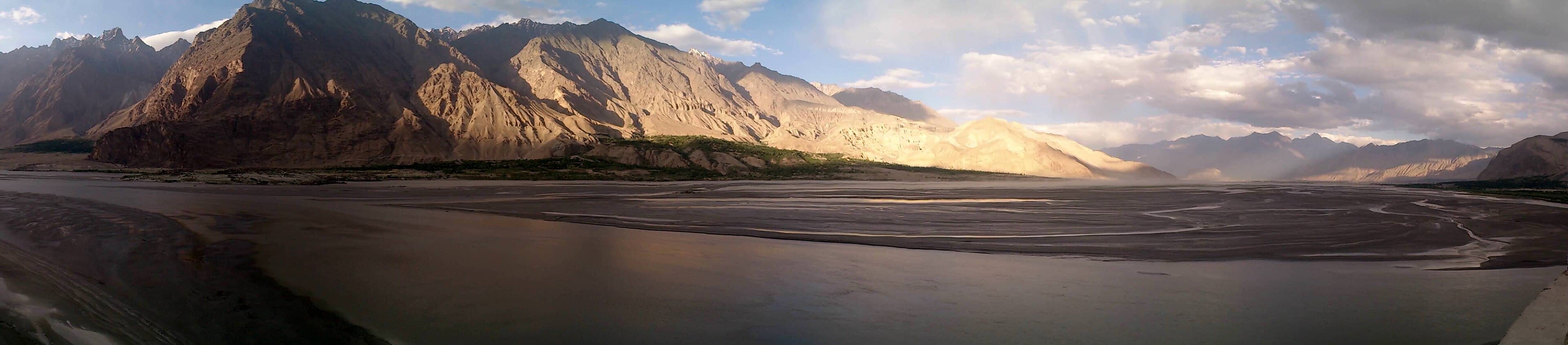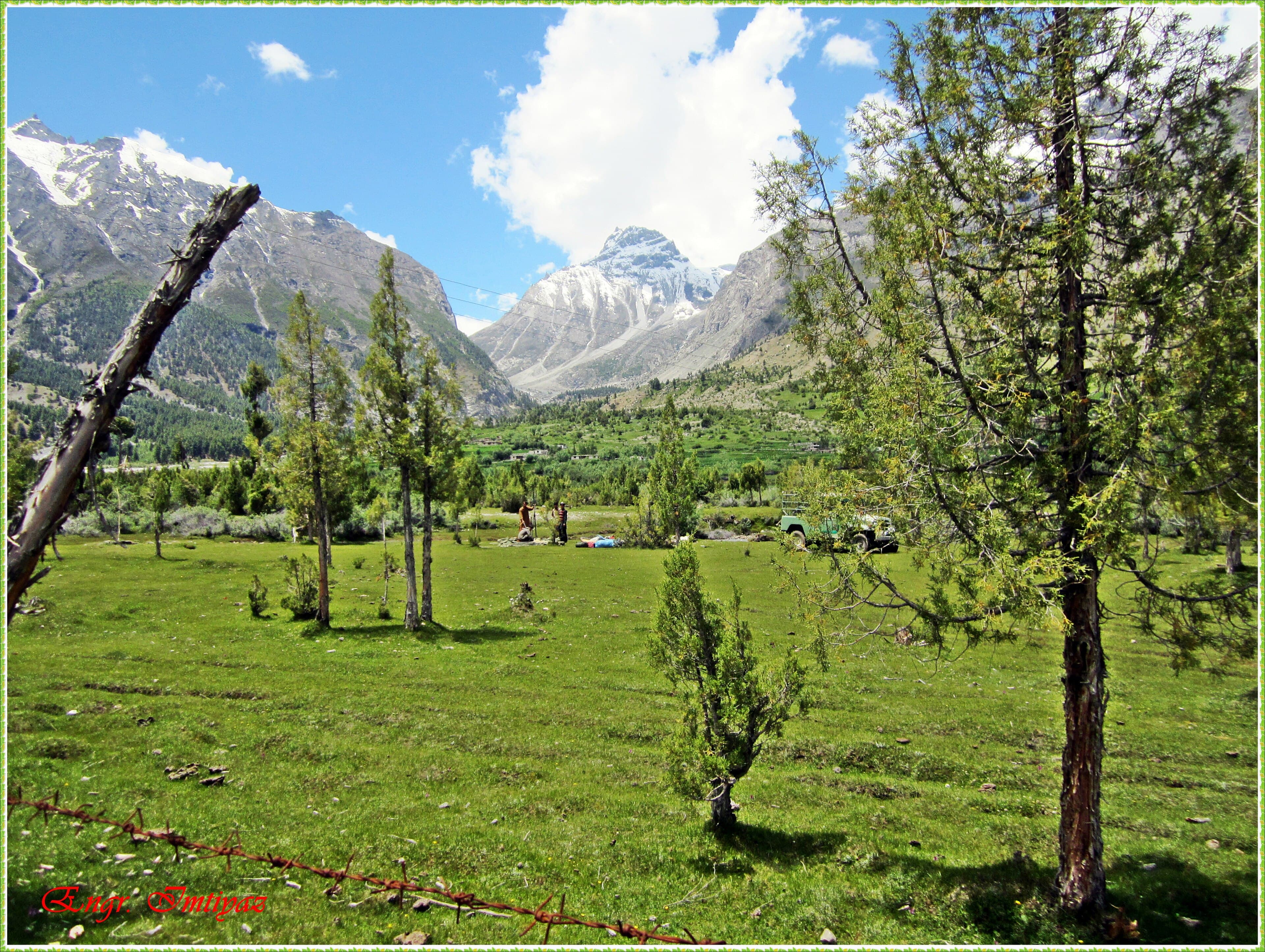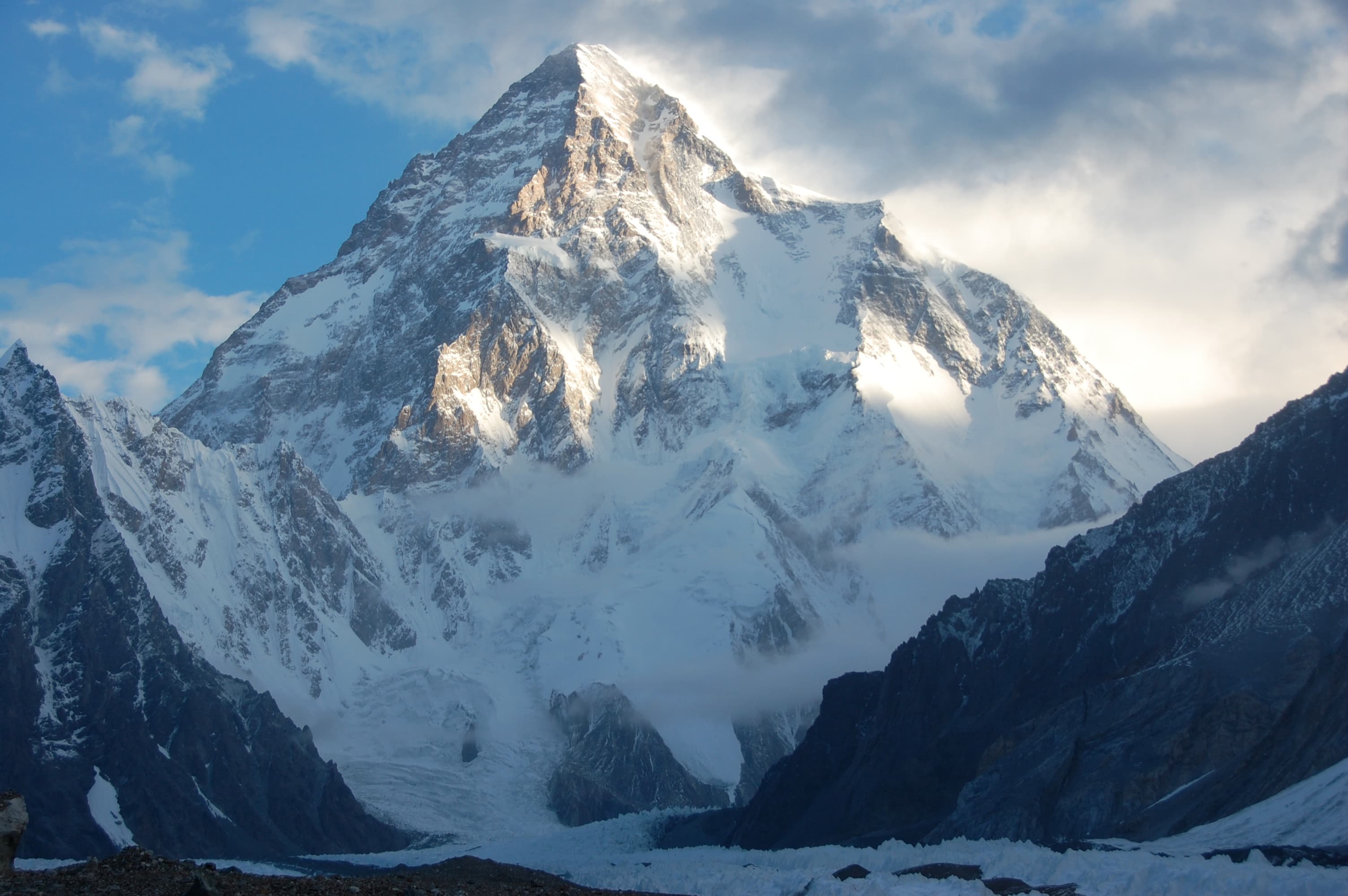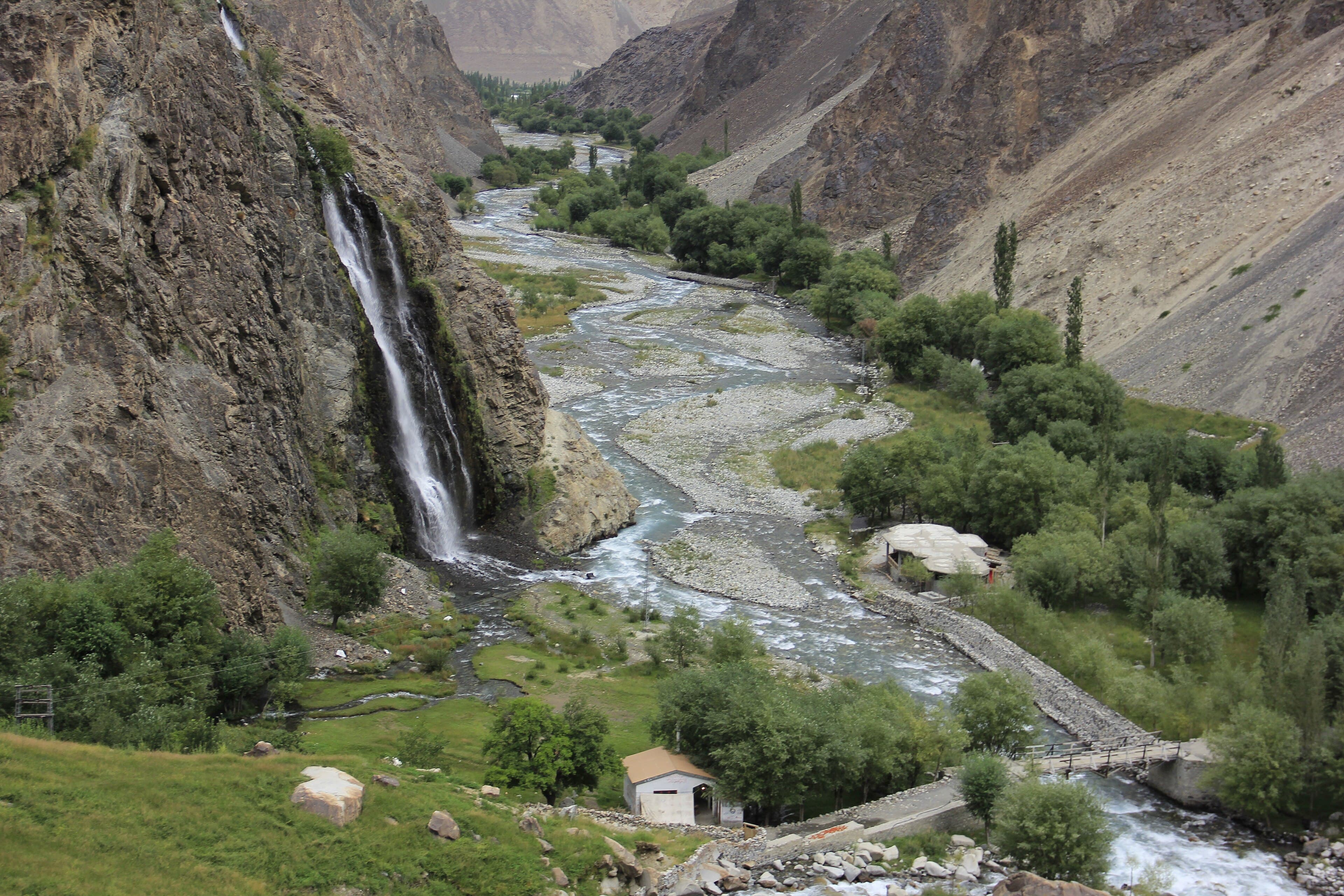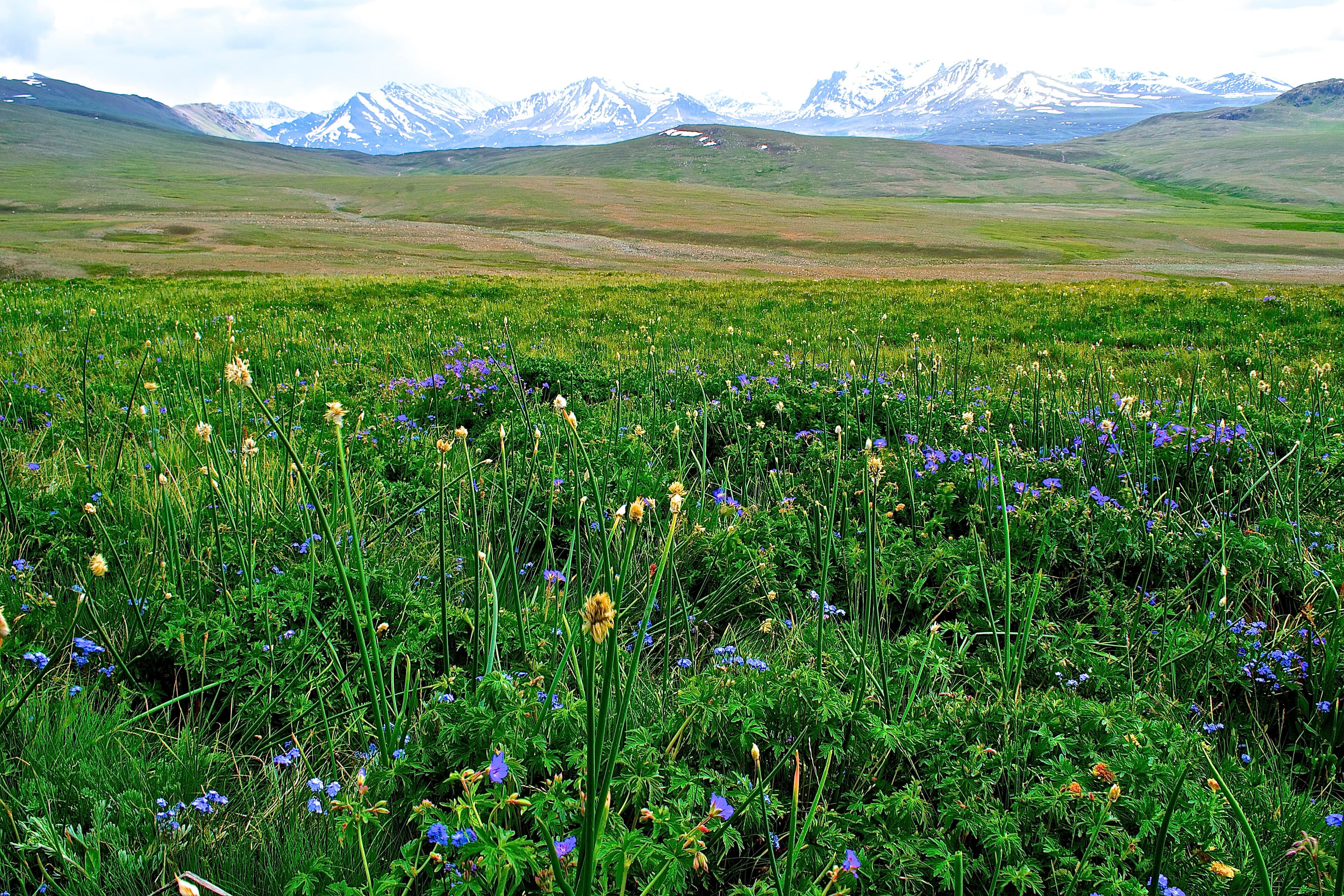
Wildflower plains of Deosai National Park with Sheosar Lake and distant peaks

Baltistan & Skardu · 4,114 m · wildlife

Deosai National Park

The Land of Giants: a rolling world above 4,000 metres

Average elevation
4,114 m
Area
≈ 3,000 km²
Flagship species
Himalayan brown bear
National park since
1993
Season
≈ late June–September

Climb the jeep road south of Skardu and the vertical Karakoram world abruptly flattens into something stranger: an ocean of rolling grassland at an average elevation of 4,114 m, often called the second-highest plateau on earth after Tibet's Changtang. This is Deosai — in Balti tradition the 'Land of Giants' — roughly 3,000 km² of treeless tundra that stays snowbound for more than half the year.

For a few summer months it erupts. From July into August the plains bloom with wildflowers, golden marmots whistle from every hummock, and streams loop through the turf toward the Shatung and Bara Deosai rivers. The plateau was declared a national park in 1993 primarily to protect the Himalayan brown bear, whose population here has recovered into one of the species' strongholds; sightings are never guaranteed, but dawn and dusk scanning near the river bridges gives you a genuine chance.

The scenic climax is Sheosar Lake near the park's western edge — a deep-blue eye in the grassland at about 4,140 m, with Nanga Parbat floating on the horizon in clear weather. It sits on the jeep route that crosses the whole plateau from Skardu to Chilim in the Astore Valley, one of the great high-altitude road trips in Asia.

Visiting needs modest planning: the park is generally open from roughly late June to September, entry fees are collected at the gates, and the altitude is serious — day-trippers from Skardu (2,230 m) gain nearly two vertical kilometres, so go gently, hydrate, and treat headaches with respect. Camps at Bara Pani offer the unforgettable option of a night under a 4,000-metre sky.

Pair Deosai with Skardu's valleys for contrast, or use the plateau crossing as the hinge of a grand circuit: Skardu over Deosai to Astore and on to Fairy Meadows beneath Nanga Parbat.
Tours featuring Deosai National Park

Nearby & related places

Deosai National Park — frequently asked questions

Can you see brown bears in Deosai National Park?

Yes, with patience and luck — Deosai protects one of the healthiest Himalayan brown bear populations anywhere, and bears are sighted regularly in summer, especially at dawn and dusk near the rivers. Keep a respectful distance, never feed wildlife, and let your guide choose safe viewing spots.

What is the best time to visit Deosai?

July and August, when the snow has gone, the wildflowers peak and all tracks and camps are open. The park is typically accessible from late June to September; outside that window snow closes the plateau.

Is Deosai safe to visit at such high altitude?

Day trips from Skardu are routine, but you'll be above 4,000 m, so altitude sickness is the real risk — ascend hydrated, move slowly and descend if headaches or nausea build. Anyone with heart or lung conditions should consult a doctor first.

Can you drive from Skardu to Astore through Deosai?

Yes — in season a 4x4 track crosses the full plateau from Skardu via Bara Pani and Sheosar Lake to Chilim in the Astore Valley, taking a long day. It's one of Pakistan's great mountain drives and links Baltistan with Rama Lake and the Nanga Parbat side.

Start the conversation

Want Deosai National Park on your itinerary?

Tell us your dates, interests and pace — we'll design a private itinerary with local guides, reliable 4x4s and hand-picked stays.