Your two options at a glance
Skardu sits deep in Baltistan at 2,230 m, and there are exactly two ways in from Islamabad: fly, or drive. The flight takes around 50 minutes and is routinely described as one of the most scenic commercial routes on earth — on a clear day you pass the Nanga Parbat massif close enough to study its glaciers. The drive takes 14–18 hours over two days for most travellers, following the Karakoram Highway and then the Skardu road up the Indus gorge.
The catch with flying is reliability: Skardu's airport sits in a mountain bowl, approaches are visual, and flights cancel whenever cloud closes in. The catch with driving is time and stamina. The smart play, which this guide unpacks, is usually to plan one leg by air and keep the road as your living, breathing backup plan.
The flight: 50 minutes of Himalayan theatre
PIA (Pakistan International Airlines) is the established operator on the Islamabad–Skardu route, flying it year-round — typically daily in summer, with jet service that replaced the old turboprops and significantly improved reliability. Additional airlines have periodically added Skardu service as the airport gained international status, so check current schedules when you book; capacity in peak season (June–August and October) sells out weeks ahead.
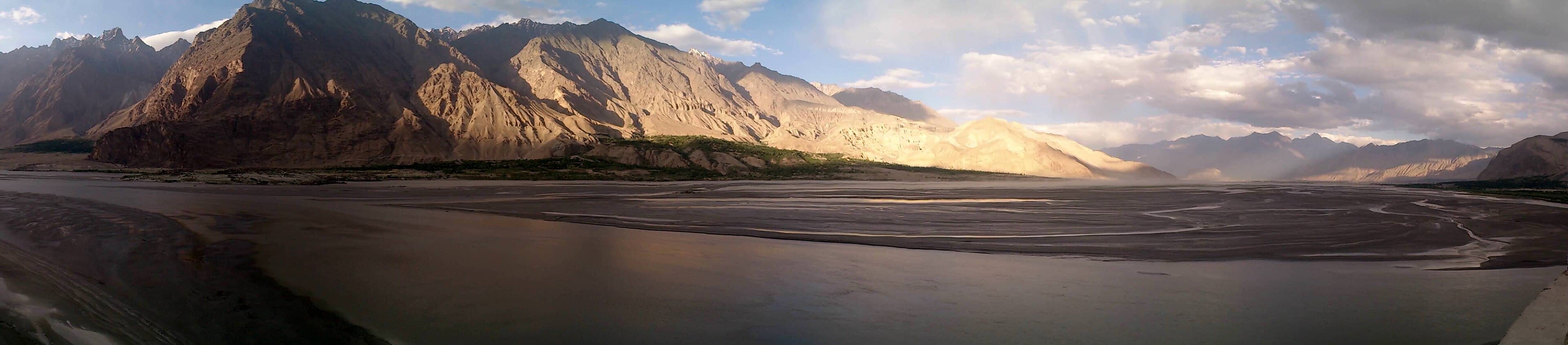
Book a window seat and check the forecast-side: seats on the left flying north typically get the Nanga Parbat show. The aircraft threads between the western Himalaya and Karakoram before dropping into the astonishing Skardu valley, where the Indus braids across a desert floor ringed by peaks. Many travellers call the flight itself a trip highlight.
The realities: flights are weather-dependent and cancellations cluster in winter and on unstable spring days; summer mornings are the most reliable. Tickets are inexpensive by international standards. If your flight cancels, you're usually rebooked on the next available departure — which may be the next day, hence the golden rule below.
The road: long, spectacular, and far better than it used to be
Overland, you follow the Karakoram Highway north past Besham and Chilas to the Alam Bridge junction near Jaglot, then turn east onto the Gilgit–Skardu road (S-1), which climbs through the Indus gorge for around 160 km to Skardu. The S-1 was substantially rebuilt and widened in recent years, transforming what was once a notorious 7–8 hour ordeal into a dramatic but reasonable 4–5 hour drive from the junction.
Total Islamabad–Skardu driving time runs 14–18 hours depending on stops, road works and checkpoints, so almost everyone breaks the journey overnight — Chilas and Besham are the conventional stops, while some itineraries overnight in Naran (summer only, via Babusar Pass) for cooler air and better hotels.
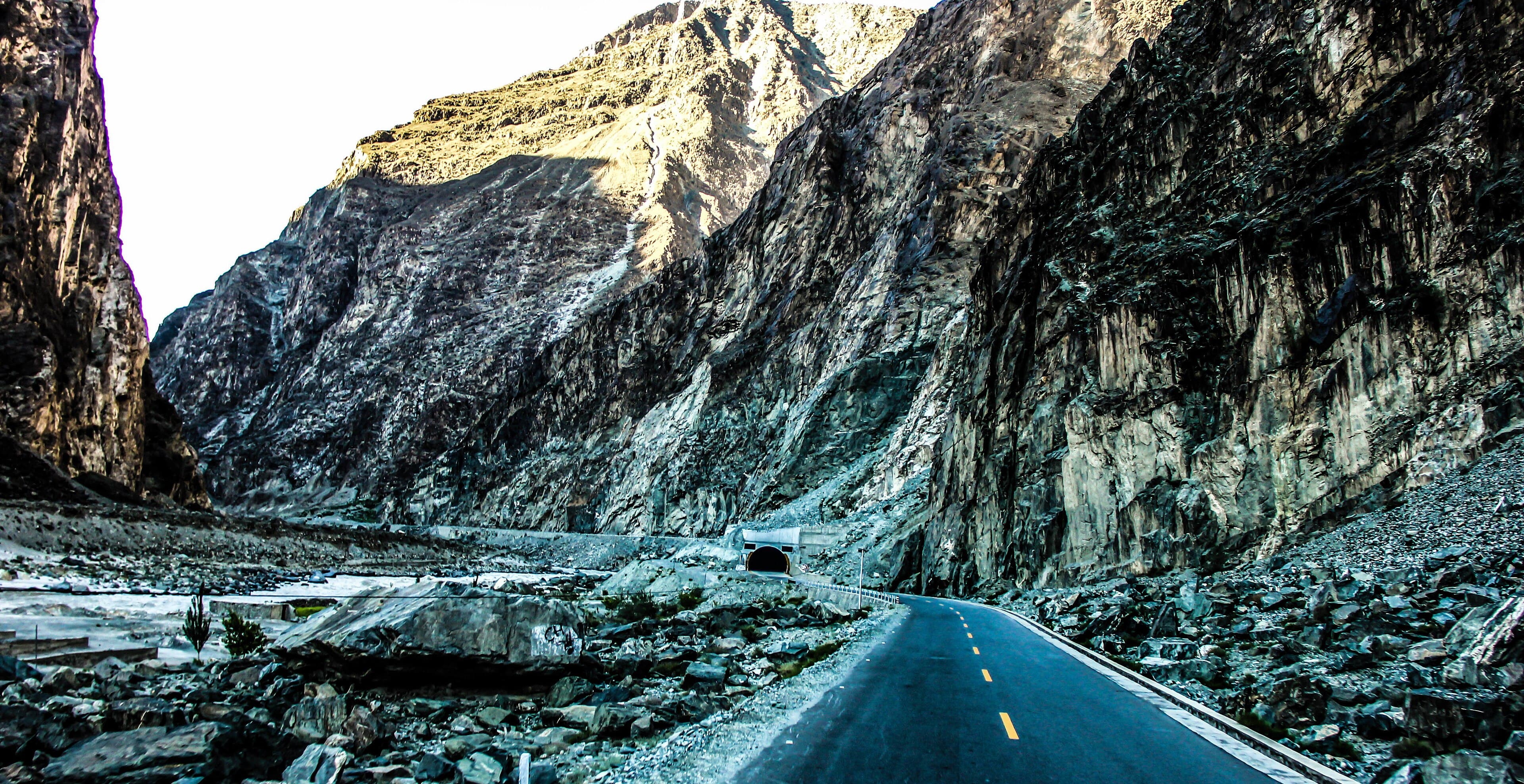
Don't think of the drive purely as a fallback: the Indus gorge section is one of the great mountain roads, squeezing between rock walls with the grey river thundering below, and it passes the junction viewpoint where the Indus separates the Karakoram, Himalaya and Hindu Kush ranges. With a good driver and an overnight break, it's an experience, not an endurance test.
When flights cancel: your backup playbook
Plan for cancellation before it happens. The standard professional approach: keep a flexible first day, have a 4x4 and driver on call, and decide in advance that if the morning flight scrubs, you hit the road the same day and sleep in Chilas — arriving Skardu by the following lunchtime. That converts a cancelled flight from crisis to plot twist.
Protect your return even more carefully. Never book the Skardu–Islamabad flight for the day before an international connection; leave at least one full buffer day in Islamabad, or plan the return overland from the start. Operators in Skardu monitor weather and flight loads obsessively and will advise honestly whether tomorrow's flight looks likely.
A hybrid worth considering: fly into Skardu and drive out via Deosai (July–September) to Astore and the KKH, or via the Skardu road to Hunza for the second half of your trip. You get the famous flight one way and see entirely different country on the ground.
So which should you choose?
Fly both ways if you're short on time and travelling in the stable summer or early-autumn windows — but build buffer days at each end. Fly in and drive out if you want both experiences and onward flexibility; this is the most popular shape for one-to-two-week Baltistan trips. Drive both ways if you're combining Skardu with Hunza, Fairy Meadows or the full Karakoram Highway road trip, where the road is the point.
Travellers prone to motion sickness should note the gorge roads are winding; sit front-seat and travel mornings. Families with young children and travellers with limited mobility generally prefer flying at least one way. Whichever you choose, the approach to Skardu — by air over the peaks or by road up the Indus — is the overture to Baltistan, and there's no bad version of it.
Questions, answered
How long is the flight from Islamabad to Skardu?
About 50 minutes. On clear days the route passes near the Nanga Parbat massif with extraordinary views of the western Himalaya and Karakoram — book a window seat and fly in the morning, when weather is most stable.
How often are Skardu flights cancelled?
Cancellations happen whenever cloud closes the visual approach into Skardu's mountain bowl — most often in winter and on unstable spring days; summer mornings are the most reliable. Always keep a buffer day, and never connect a Skardu flight directly to an international departure.
How long does it take to drive from Islamabad to Skardu?
Around 14–18 hours of driving, normally split over two days with an overnight in Chilas, Besham or (in summer) Naran. The rebuilt Gilgit–Skardu road has cut the final gorge section to roughly 4–5 hours from the KKH junction.
Is the road from Gilgit to Skardu safe?
The Skardu road was rebuilt and widened in recent years and is now a dramatic but well-engineered drive of about 4–5 hours along the Indus gorge. Use an experienced local driver, travel in daylight, and expect routine passport checkpoints.
Can I fly from Islamabad to Gilgit instead?
Yes — there are short Islamabad–Gilgit flights, useful for Hunza-focused trips, though they're flown by smaller aircraft and are even more weather-sensitive than Skardu services. Gilgit to Skardu is then 5–6 hours by road, so for Baltistan itineraries the direct Skardu flight is usually better.